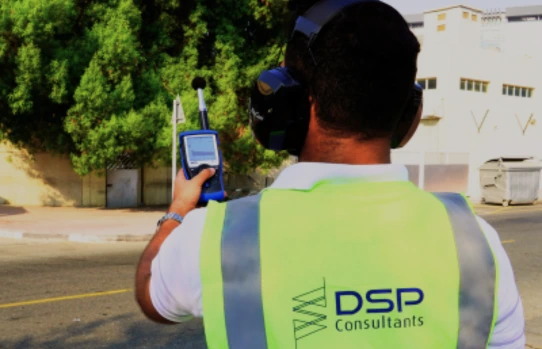
With cities growing fast and new buildings proposed everywhere, knowing how much noise people are actually exposed to has become a concern. This isn’t just about apartments or hotels, schools, hospitals, busy roads, and factories, but all the projects need long-term noise monitoring.
Short-term noise surveys or desktop studies doesn’t provide a clear wider noise climate at any project site. They only show a quick snapshot, missing all sorts of changes caused by things like traffic patterns, work schedules, weather, or just people going about their day. Relying on short-term data can lead to a wrongly designed building’s sound insulation performance.
Objectives of the Study
- Get a clear baseline for noise at the site
- Find out exactly where most of the noise comes from
- Track how things change between day and night
- Check if the noise meets local and international standards
- Give decision-makers the info they need to handle noise the right way
Scope and Limitations
We focused on the usual, everyday noise over a long stretch, one-off events that don’t reflect what’s really going on. Unless we state otherwise, we didn’t include predictions or models for noise from future operations.
Technical Evolution / Literature Review
Historical Context
Measuring noise has come a long way. What started as quick, manual readings has turned into round-the-clock, automated monitoring. Thanks to digital sound meters, remote logging, and cloud tools, the data’s now much more accurate and reliable.
Key Standards and Guidelines
We followed the major international standards:
- ISO 1996 – How to measure and assess environmental noise
- IEC 61672 – What counts as a proper sound level meter
- WHO Guidelines – What’s safe for communities
- Local Codes – The local rules we have to follow
Global Adoption Trends
These days, long-term noise monitoring isn’t just for specialists. Smart cities, big infrastructure projects, environmental impact studies, and community programs all use it as a standard tool. Long-term noise monitoring really gets to the heart of what’s happening on-site; it doesn’t just guess or rely on old data. By measuring what’s actually going on, you get the real picture: what the baseline noise levels are, what the noise sources impacting the site are, and whether that noise is short-term or long-term. This data is the baseline for assessing building envelope sound insulation performance, such as glazing and external walls.
Current Standards & Regulatory Framework
International Standards
- ISO 1996 (Parts 1 & 2)
- IEC 61672 Class 1 Sound Level Meter
- WHO Environmental Noise Guidelines
Regional Compliance Requirements
We made sure our work lines up with local regulations, including
- UAE noise limits
- KSA compliance codes
- GCC planning requirements
Comparative Overview of Standards
Region: International | Authority: ISO / WHO | Use: Environmental and community noise
Region: UAE | Authority: Local Municipal Codes | Use: Planning and EIA compliance
Region: KSA | Authority: National Environmental Regulations | Use: Industrial and infrastructure
Design Methodology
Monitoring Strategy and Location Selection
Locations are based on three main factors: Project boundaries, the highest numbers of noise sources affecting the site, and where noise-sensitive zones will be noise sensitive zones as per the project site plan.
Equipment and Instrumentation
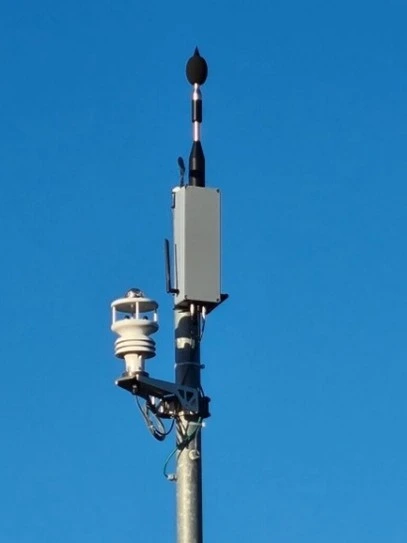
Sound meters that meet IEC 61672, with weatherproof gear, windshields, sturdy mounts, and either internal batteries or solar power.
Installation and Setup
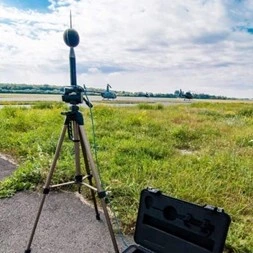
Microphones are placed at standard heights using tripods or fixed mounts to keep them steady. Before and after monitoring, we double-checked calibration to make sure everything was accurate.
Data Recording Parameters
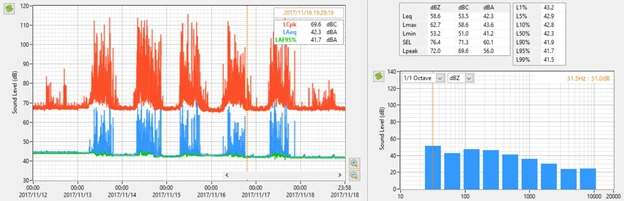
- The system logs noise non-stop
- Every reading is time-stamped
- Track day versus night
- Record maximum, minimum, and average levels
Quality Control
Filter out any data that got messed up by bad weather, equipment issues, or random events that don’t reflect normal site conditions.
Sustainability Considerations
Environmental Impact
Long-term monitoring supports sustainable planning by revealing which noise issues are persistent and which are only short-lived fluctuations. This allows to address the underlying problems rather than reacting to occasional or temporary noise events.
Green Certification Support
Noise compliance contributes toward:
- LEED
- BREEAM
- Local sustainability rating systems
Practical Applications
Long-term noise monitoring is used in a wide range of settings. It is essential for Environmental Impact Assessments, for securing approvals for masterplans and zoning, and for ensuring residential or hospitality developments avoid future noise problems. Planners depend on it for major infrastructure and transport projects, and facility or asset managers use it to protect building performance and user comfort. It also greatly simplifies the process of investigating and resolving community noise complaints by providing robust, time-based evidence.
Future Outlook
Looking ahead, there’s a lot happening. Noise monitoring is starting to plug right into smart city platforms. Remote dashboards let people track noise in real time. We’re also seeing this data blend into wider environmental records.
Conclusion & Recommendations
Long-term noise monitoring provides a more accurate view of environmental noise patterns. It captures fluctuations that short-term surveys overlook, enabling superior planning decisions. For best results, adopt long-term monitoring in sensitive areas or major projects, adhere to established international standards for reliable data, and integrate findings early in design to avoid costly retrofits. Skipping risks overlooks critical impacts, regulatory delays, and community disputes.